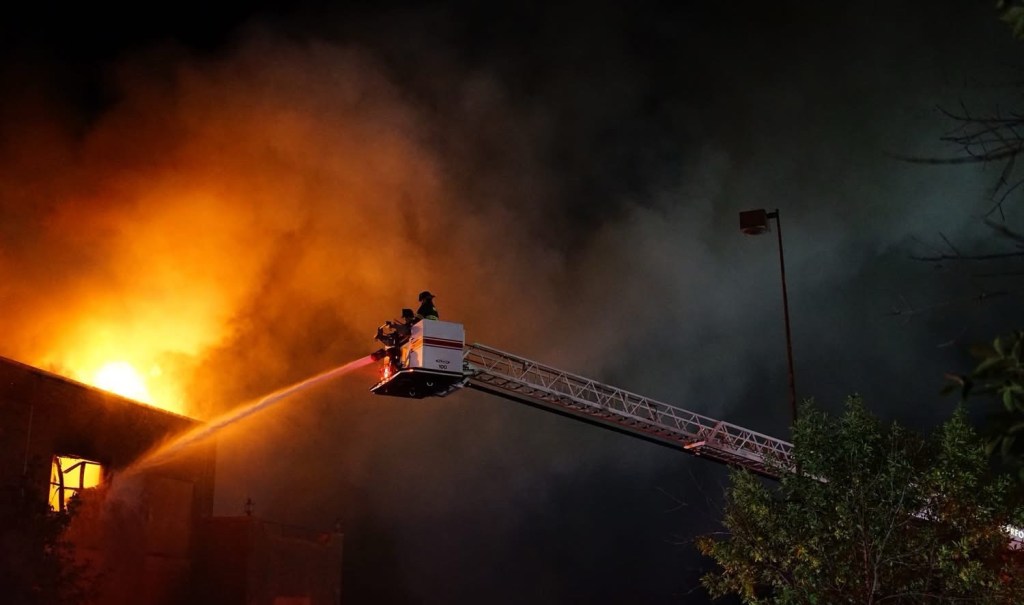
Keeping Watch with Christ: The Liturgy of the Hours for Firefighters
Why the Liturgy of the Hours Matters
The Catholic tradition calls the Liturgy of the Hours (also known as the Divine Office) the official prayer of the Church. It sanctifies each part of the day—morning, noon, evening, and night—so that the whole rhythm of time is offered back to God.
For firefighters, this practice carries a deep spiritual connection. Just as we are always “on watch” for emergencies, the Church is always on watch in prayer. Praying the Hours keeps us rooted in God’s presence, uniting our daily duty with the eternal rhythm of the Church’s prayer around the world. It reminds us that our vocation is not only to protect lives and property but also to remain vigilant in faith.
Saint Paul exhorts us to “pray without ceasing” (1 Thess. 5:17). For firefighters, whose schedules are unpredictable and demanding, the Liturgy of the Hours provides a structured and flexible way to do exactly that.
A Brief History of the Liturgy of the Hours
The Liturgy of the Hours is one of the oldest forms of Christian prayer, rooted in the Jewish practice of praying at set times of the day. The early Church inherited this rhythm, praying the Psalms at sunrise, midday, and sunset.
By the 4th century, the practice was firmly established among monks, clergy, and lay faithful. Monastic communities in particular made the Hours their heartbeat, ensuring that the Church never ceased its prayerful vigil. Over time, this structure was codified and unified, so that the entire Catholic Church—across all nations and languages—prayed the same psalms and readings in a continuous cycle.
The Second Vatican Council called the Liturgy of the Hours the prayer of the whole Church, not just of clergy and religious. When we pray it, we are joining priests, monks, nuns, and lay faithful worldwide in a single voice of praise, intercession, and thanksgiving.
This makes the Liturgy of the Hours not just a personal devotion but a liturgical act, part of the official worship of the Church. When you pray Morning Prayer or Night Prayer at the firehouse, you are uniting your voice to the universal Church’s offering of praise to God.
Praying the Hours on and off Shift
Morning Prayer (Lauds)
When: Start of shift, before roll call, or during morning quiet time. Why: It consecrates the workday to God, offering your shift and its unknown challenges into His hands. Practical Tip: Gather with Catholic brothers and sisters on your crew if possible; even 5 minutes together sets the tone for the day.
Daytime Prayer (Terce, Sext, None)
When: Break time, lunch, or in the cab between runs. Why: It brings God into the heart of the workday, reminding us that His presence doesn’t fade during chaos. Practical Tip: If the full psalms aren’t possible, pray just one psalm or the short reading. Even a brief prayer keeps the day consecrated.
Evening Prayer (Vespers)
When: After dinner at the firehouse or at home with your family. Why: It gives thanks for the day’s protection and strength, while asking forgiveness for failures and strength for tomorrow. Practical Tip: Invite your spouse or children to pray Vespers with you—make it a family rhythm that unites your vocation at work with your vocation at home.
Night Prayer (Compline)
When: Just before bed, whether at the station or home. Why: It places your final thoughts in God’s care, asking Him to guard you through the night watch. Practical Tip: Keep it simple—Night Prayer is short and often the most doable after long shifts.
How to Make It Work on Shift
Use Apps or Books iBreviary or Divine Office apps make the Liturgy of the Hours accessible on a phone. Keep a small “Christian Prayer” book in your turnout bag if you prefer print. Team Prayer When Possible If other Catholic firefighters are present, pray Morning or Evening Prayer together in the kitchen or dayroom—it strengthens fraternity and witness. Be Flexible, Not Rigid Emergencies happen. Don’t feel defeated if you miss a set hour—pray when you can, and remember you are part of the universal Church’s continuous prayer. Link Prayer to Calls Use “down time” after a difficult call to pray a psalm or intercession. It brings healing and perspective, offering the tragedy back to God. Unite Work with Prayer Even when you can’t stop to read the Office, the intention to offer your labor and watchfulness as prayer keeps your shift connected to Christ.
Why Firefighters Especially Need the Hours
Our work constantly confronts life, death, fear, and sacrifice. The Liturgy of the Hours forms our hearts so that we never face those realities alone. It keeps us tethered to the Cross of Christ, reminds us of our baptismal identity, and helps us remain strong witnesses of faith in the firehouse and on the fireground.
Praying the Hours daily makes sure our watch is never just about alarms and emergencies—it becomes a holy vigil with the Lord.
✠ Saint Florian, patron of firefighters, pray for us.
✠ Mary, Mother of the Church, protect our Battalion.
Pro Dio et Populo – For God and the People
 saintflorianbattalion.org
Leave a comment